Best 3D Printer Buying Guide — Black Friday Deals 2026
A 3D printer purchase is easier to judge when you start with the work you expect it to do: quick setup, a larger stated print area, or an enclosed workflow with multi-color capability. This guide compares the FLASHFORGE Adventurer 5M, Bambu Lab P1S Combo, and Entina Tina2C using their listed features, not assumed performance or sale claims. During Black Friday shopping, treat a headline deal as a prompt to inspect the exact model and configuration rather than proof of a discount or a fit. Consider the space available, the materials you plan to use, and how much setup guidance you want before choosing.
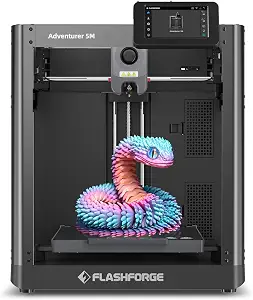
FLASHFORGE Adventurer 5M 3D Printer (ASIN B0CH4NYL6J)
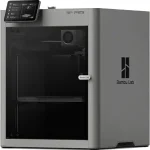
Best Overall is the editorial pick for the FLASHFORGE Adventurer 5M because its listed features span several practical purchase questions: print area, leveling, speed, nozzle changes, and remote monitoring. Its stated print size is 220x220x220mm, and automatic bed leveling is included. Those details give a shopper concrete points to check against planned projects and preferred setup routines. The CoreXY all-metal structure and 280°C direct drive extruder are also part of the listed specification; consider them in relation to the kinds of prints you intend to make rather than treating either phrase as a guarantee of a particular result.
The listing specifies 600mm/s travel speed, a detail worth reading carefully: it is travel speed, not a claim here about the speed of every print. Quick 3-second nozzle changes may matter if changing nozzles is part of your routine, while Flash Studio is described as allowing remote monitoring of print progress, settings adjustments, and instant status alerts. For a household or workspace where checking on a job remotely is useful, those controls may be appealing. The practical tradeoff is to decide whether these particular capabilities matter more to you than an enclosed body, guided app setup, or a stated multi-color workflow offered in the other entries.
The Best Overall label is a guide to this shortlist, not a claim of measured superiority or a market-wide award. Before a Black Friday purchase, match the listing to the Adventurer 5M and confirm that the displayed offer is for the configuration you intend to buy. Think through the objects you want to print and whether the listed print size fits those plans; do not assume a project will fit based only on its general category. If remote status checks and the nozzle-change feature would see regular use, they may help make this model a compelling candidate. If your priority is a fully enclosed body or an app-guided, fully assembled starting point, compare those needs directly with the other options instead.
Key specs
Print volume
Print Size 220x220x220mm
Bed leveling
automatic bed leveling
Print speed
600mm/s travel speed
Frame
CoreXY All Metal Structure
Extruder
280°C direct drive extruder
Nozzle changes
Quick 3-second nozzle changes
Print monitoring
Monitor print progress, adjust settings, and receive instant status alerts remotely with the Flash Studio.
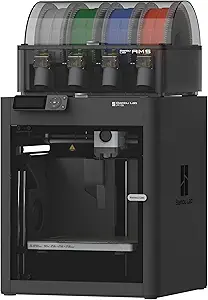
Best for enclosed multi-material workflows is the editorial label for the Bambu Lab P1S Combo. Its fully enclosed body is described as improving print performance for advanced filaments, and its listing names several material groups with different qualifications. PLA, PETG, TPU, PVA, PET, ABS, and ASA are listed as ideal; PA and PC as capable; and carbon- or glass-fiber-reinforced polymer as not recommended. That wording is useful when choosing a printer around a material plan: keep the distinctions intact, and check the precise filament you hope to use rather than assuming every material is equally suitable.
The multi-color feature is listed as supporting up to 16 colors, with an important condition: connecting Bambu Lab AMS is required. Treat that condition as a configuration question during Black Friday shopping. Confirm what the particular offer and variant provide and whether the required connection matches your intended setup; the product name alone does not settle package contents. Auto bed leveling is also listed, which may appeal to shoppers who want that function as part of their printer selection. The machine’s stated dimensions are 15.31 x 18.03 x 15.31 inches, and its listed weight is 47.5 pounds, so consider placement and moving arrangements before committing.
This choice makes most sense for a shopper whose plans specifically call for an enclosed printer and who values the stated multi-color or multi-material capabilities. The word “Combo” should prompt a careful configuration check, not an assumption about what is included in a particular listing. Likewise, the filament guidance is not a reason to overlook the not-recommended category. Compare your planned materials with each qualification and decide whether the machine’s listed capabilities match your real projects. The Best for enclosed multi-material workflows label describes why it stands out among these three supplied options; it does not establish a tested ranking. On Black Friday, inspect the exact model and any included components before deciding that an offer suits your workflow.
Key specs
Multi-color printing
Up to 16 Colors: Bring your designs to life with vibrant multi-color/multi-material printing capabilities, perfect for showcasing your creativity. Note: Connecting Bambu Lab AMS is required.
Enclosure
Fully enclosed body improves print performance for advanced filaments.
Bed leveling
Auto bed leveling makes 3D printing such an easy thing.
Supported filament
Ideal: PLA, PETG, TPU, PVA, PET ABS, ASA; Capable : PA, PC; Not Recommended: Carbon/Glass Fiber Reinforced Polymer.
Best Budget is the editorial label for the Entina Tina2C, chosen here for its fully assembled description and guided setup. The listing says it arrives fully assembled with factory presets and offers guided setup through the Poloprint app. That combination may suit someone who would rather begin with an app-led setup path than make assembly the first part of the experience. This is a fit-based reason for the label, not a statement about its price, measured performance, or value compared with printers outside this guide. Check the actual Black Friday listing and the exact variant before using the label to make a purchase decision.
The Tina2C’s build volume is 3.9 x 3.9 x 3.9-inch. Consider that stated space in relation to the size of the items you expect to print; it is a useful planning constraint, not a promise that every object of a similar general type will suit the machine. The flexible magnetic build plate is described as making finished prints easier to remove with a gentle bend. It connects a specific feature to a practical moment after printing, though the listing does not establish that every print releases in the same way. For connectivity, the provided detail specifies 2.4GHz WiFi. Power-loss recovery helps users resume printing after unexpected interruptions, another feature to consider if interruptions are a concern in your routine.
For a first printer or a convenient option for app-guided setup, the details to weigh are the pre-assembled format, factory presets, Poloprint guidance, and compact stated build volume. Think about whether the available print space suits your plans before letting setup convenience decide the choice. During Black Friday, verify the product identity and offer configuration, then compare those details with your needs rather than assuming a low headline price or a discount. The Best Budget designation is an editorial choice among the products in this guide; it does not claim a particular sale price or that the Tina2C is the least expensive option in the wider market.
Key specs
Assembly
Fully assembled with factory presets
Setup
guided setup through the Poloprint app
Connectivity
Connect via 2.4GHz WiFi
Print recovery
Power-loss recovery helps users resume printing after unexpected interruptions
Build plate
The flexible magnetic build plate makes finished 3D prints easier to remove with a gentle bend.
Build volume
With a 3.9 x 3.9 x 3.9-inch build volume
Let the planned project set the first boundary
Start by describing a few things you actually want to make, including their approximate size and the materials you expect to use. That simple exercise can narrow the shortlist more effectively than choosing by a feature name alone. The Adventurer 5M lists a print size of 220x220x220mm, while the Tina2C lists a build volume of 3.9 x 3.9 x 3.9-inch. Keep those source formats as written when comparing them, and check project dimensions against the stated space rather than relying on a general impression of printer size. If a specific object is a priority, make sure its dimensions and intended orientation are realistic for the available volume.
Material plans also change the comparison. The P1S Combo listing distinguishes ideal materials from those it says it is capable of handling and those it does not recommend. Use those exact qualifications to guide further checking, especially if you already have a particular filament in mind. Its enclosure and stated multi-color capability may be relevant to a workflow centered on those features, but multi-color printing requires connecting Bambu Lab AMS. A Black Friday shortlist should therefore reflect your likely projects, material requirements, and configuration needs together. A printer with appealing general features is not automatically the right fit for a particular print.
Separate a listed speed from your expectations
Specifications are most useful when read narrowly. The Adventurer 5M lists 600mm/s travel speed; the wording identifies travel speed, so do not turn it into a general promise about how quickly every finished object will be printed. Likewise, a stated nozzle temperature or a structural description is a product detail to consider, not enough on its own to predict the result of a specific job. If production time is important, check the information for your intended model, material, and settings before making it the deciding factor. This keeps a Black Friday comparison anchored in what the listing actually says.
Look at features in terms of routine as well. Automatic bed leveling appears in the Adventurer 5M listing, and auto bed leveling appears in the P1S Combo listing. The Tina2C instead highlights fully assembled delivery with factory presets and guided setup through Poloprint. Ask which kind of support matters at the point you are likely to need it: a listed leveling feature, an app-guided setup, remote status checks, or another capability. You do not need to treat one feature as a substitute for another. A careful shopper can compare the exact wording and decide which details answer their own practical questions.
Treat setup and follow-up as part of the purchase
The first setup is only one part of using a printer; think about the interactions you expect after it is running, too. The Tina2C is described as fully assembled with factory presets and guided setup through the Poloprint app. It connects via 2.4GHz WiFi, and its listing names power-loss recovery as a way to help users resume after unexpected interruptions. Those details may be especially relevant if you want a guided starting point or see interruption recovery as useful. They do not establish that setup takes a particular amount of time or that every interrupted job will resume in the same condition.
For ongoing checks, the Adventurer 5M listing says Flash Studio can monitor print progress, adjust settings, and provide instant status alerts remotely. Decide whether those remote functions would make a meaningful difference to your routine before giving them extra weight. The P1S Combo’s listed auto bed leveling may answer a different setup preference, while its enclosed body and material qualifications may matter more once you choose what to print. On Black Friday, compare the features you will use repeatedly, not merely the longest feature list. A realistic view of setup, checking, and recovery can help you avoid paying attention to an appealing detail that is not important for your own workflow.
Check configuration details before comparing offers
Black Friday headlines can make different product configurations look interchangeable. Use the exact model name and the details shown for the particular listing before deciding that two offers refer to the same purchase. This is especially important for the P1S Combo: its multi-color feature is described as requiring a connection to Bambu Lab AMS, while the supplied facts do not specify package contents. Confirm the configuration and what is included in the offer rather than inferring it from “Combo” or from a product image. The same careful approach applies to any chosen variant or bundled components.
Then compare what the listing actually says with the feature that led you to consider the printer. For the Adventurer 5M, that could mean checking that the offer corresponds to the model whose print size, travel speed, and remote-monitoring feature you reviewed. For the Tina2C, confirm that the product identity matches the assembled, app-guided model you intend to buy. Do not assume that a Black Friday banner proves a promotion is active, that a displayed discount applies to every variant, or that an offer is better because its headline sounds broader. The goal is a like-for-like comparison based on the exact item and the needs you identified.
Plan for footprint, handling, and removal
A printer’s place in your home or workspace is a buying question, not an afterthought. The P1S Combo lists dimensions of 15.31 x 18.03 x 15.31 inches and a weight of 47.5 pounds. Use those specifications to assess the intended surface and whether moving the machine is practical for you; the listing details do not describe a particular placement arrangement. The Tina2C’s stated build volume can also help you think about the scale of projects you plan to make, while the Adventurer 5M provides its print size as a separate point of comparison. Match the physical details to your space and plans rather than choosing by name alone.
Consider the end of a print as well as the beginning. The Tina2C’s flexible magnetic build plate is described as helping make finished prints easier to remove with a gentle bend. If removal is a concern in your routine, that specific feature deserves attention, while recognizing that the listing does not promise an identical outcome for every print. Enclosure may be a more important consideration for shoppers focused on the P1S Combo’s advanced-filament description. For a Black Friday decision, put each feature beside a real question about placement, handling, or project needs. This makes the comparison more useful than treating every specification as equally important.
Make your Black Friday choice
The right choice depends on which listed features solve a real problem for you: Adventurer 5M’s remote monitoring and quick nozzle changes, P1S Combo’s enclosure and conditional multi-color workflow, or Tina2C’s assembled format and guided app setup. Recheck the materials, stated print space, and configuration that matter most before buying. Black Friday is a useful time to compare offers, but a banner alone does not establish a discount or a match. Confirm the exact model and variant, then choose the printer whose documented details fit your plans and available space.