Choosing a GPU is easier when you begin with the role it needs to fill: the displays you connect, the card design you can accommodate, and the specifications that matter to your routine. This guide compares three options with different memory configurations, cooling designs, and output details. The ASUS card pairs 16 GB of GDDR7 with a dual-BIOS feature; the XFX model offers 16 GB of GDDR6 and triple-fan cooling; the GIGABYTE card has 8GB of GDDR7 and a two-fan design. Black Friday can make listings tempting, but a promotion alone does not identify the right card. Compare the precise model and variant, then weigh its listed features against your priorities before deciding.
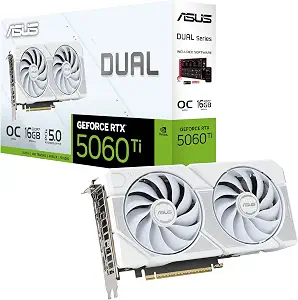
ASUS Dual GeForce RTX 5060 Ti 16GB GDDR7 White OC Edition Graphics Card
ASUS Dual GeForce RTX 5060 Ti 16GB GDDR7 White OC Edition Graphics Card (ASIN B0G1FVLWSG)
Best Overall is the editorial label for the ASUS Dual GeForce RTX 5060 Ti 16GB GDDR7 White OC Edition Graphics Card. Its combination of 16 GB of graphics memory and dual BIOS makes it a useful starting point for shoppers who want to compare memory capacity alongside a choice of operating profile. The BIOS feature lets you toggle between Quiet and Performance BIOS profiles. That gives the buyer a stated configuration choice, rather than requiring the card to be considered only as a list of clock and memory figures. The label describes this guide’s selection among the featured cards; it is not a claim of measured superiority.
The listed GPU clock is 2632 MHz in OC mode and 2602 MHz in Default mode. Those figures describe the two modes, so keep the mode distinction intact when comparing listings. The card has a 2.5-slot design, a practical detail to check against the space available in the intended system. No case dimensions are supplied here, so confirm fit using the card and system details before purchase rather than relying on the slot description alone. Its white finish is part of the product name and may also matter to shoppers coordinating a particular build appearance.
For display planning, ASUS lists one native HDMI 2.1b output and three native DisplayPort 2.1b outputs. Compare those connectors with the displays and cables you actually plan to use, and make sure the exact listing is for this model rather than a similarly named card. During Black Friday, inspect the offer details and variant carefully; do not assume a deal applies to every card in the same family. This model may suit someone who values the stated 16 GB capacity, wants the Quiet and Performance BIOS choice, and has checked the 2.5-slot design and output needs. Consider those priorities together, rather than treating any one specification as a complete verdict.
Key specs
Graphics memory
16 GB
GPU clock
2632 MHz (OC mode)/ 2602 MHz (Default mode)
Video outputs
1 x Native HDMI 2.1b, 3 x Native DisplayPort 2.1b
Slot design
2.5-slot design
BIOS profiles
Dual BIOS lets you toggle between Quiet and Performance BIOS profiles
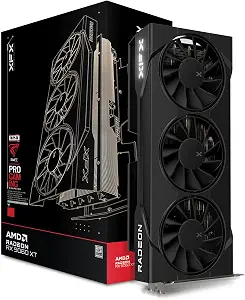
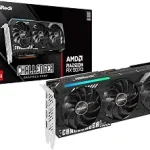
XFX Swift AMD Radeon RX 9060 XT OC Triple Fan Gaming Edition
XFX Swift AMD Radeon RX 9060 XT OC Triple Fan Gaming Edition (ASIN B0F8128Y33)
Best for a triple-fan cooling design is the XFX Swift AMD Radeon RX 9060 XT OC Triple Fan Gaming Edition. The label points to a clearly stated feature in this particular set of options: XFX SWFT Triple Fan Cooling Solution. Shoppers who are comparing card layouts can use that detail as a shortlist criterion, while keeping in mind that the provided information does not establish a measured cooling result. The card is based on the AMD RX 9060 XT and lists 16 GB of GDDR6 memory. Those details help distinguish it from the two NVIDIA models here, without implying a performance comparison.
XFX lists a base clock of 1900 MHz and a boost clock up to 3320 MHz. Keep the “up to” qualification when reading the boost figure, and compare the exact model rather than assuming another RX 9060 XT listing has the same clocks or cooler. For a buyer organizing a system around a particular graphics card, these specifications can help make the product record easier to identify and compare. They do not by themselves answer whether the card suits a particular game, application, or system; those decisions require needs and information beyond the supplied specifications.
The listed outputs are HDMI and 2xDP, and the interface is PCI-Express x16. Check the output types against the displays you intend to connect, and verify the full listing details for any other system requirements you need to confirm. The product facts provided here do not include card dimensions, so do not infer fit from the triple-fan description. Black Friday shoppers can use this model as a candidate when a triple-fan design and 16 GB of GDDR6 are priorities, then compare the exact offer and variant against alternatives. The listed cooling arrangement is a design feature, not proof of quieter operation or better results. This is a good example of why a feature-based shortlist should be followed by a careful fit and listing check.
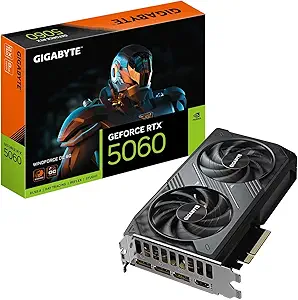
Best Budget is the editorial label for the GIGABYTE GeForce RTX 5060 WINDFORCE OC 8G Graphics Card. It identifies the guide’s budget-oriented pick among these products, not a claim that the card has the lowest current price or that a Black Friday discount is available. Its listed memory is 8GB GDDR7 with a 128bit memory interface. That configuration gives shoppers a straightforward basis for deciding whether this card’s stated memory is suitable for their own plans, then checking the exact listing rather than assuming every RTX 5060 has the same specifications.
The GPU clock speed is listed as 2512 megahertz, and the interface is PCIe 5.0. GIGABYTE also specifies a WINDFORCE cooling system with two fans. Those are useful identifying details when comparing the product page with other cards, but they should not be stretched into claims about temperature, noise, or application performance. If the card’s size is part of your system-planning checklist, the listed dimensions are 7.83″L x 4.57″W. Compare that exact formatting and the product’s full fit information with your system before checkout; the dimensions supplied here are not a substitute for checking the available space yourself.
For displays, the stated outputs are DisplayPort and HDMI. The source facts do not specify how many of each, so check the product listing if the number of connections matters to your setup. This can be an appealing candidate for shoppers who want to consider a GIGABYTE RTX 5060 with GDDR7 memory, PCIe 5.0, and a two-fan cooling design, while keeping its 8GB memory detail central to the decision. During Black Friday, compare the exact card and offer rather than choosing based on a promotional label alone. The Best Budget designation is a guide-level comparison, not a price guarantee. Check that the selected variant matches the model name and features described here before making a purchase.
Key specs
Memory
8GB GDDR7 128bit memory interface
Interface
PCIe 5.0
Cooling
WINDFORCE cooling system
GPU clock
GPU Clock Speed 2512 megahertz
Video outputs
DisplayPort, HDMI
Fans
Number of Fans 2
Dimensions
7.83″L x 4.57″W
Match the card to the job you expect it to do
Start by describing your own use before comparing model names. Consider what you want the GPU to support, which displays you plan to connect, and which specifications you want to prioritize. The supplied details can help narrow the choice, but they do not include performance results for particular games or applications. Avoid treating a clock figure or memory amount as a complete prediction of how a card will behave in your setup. Instead, use those facts to identify products worth researching further, and confirm any requirements that are important to your specific workload.
The ASUS and XFX options each list 16 GB of memory, but the memory types differ: GDDR7 for ASUS and GDDR6 for XFX. The GIGABYTE card lists 8GB of GDDR7. These are factual distinctions for comparison, not a guarantee that one configuration will suit every task better. During Black Friday, write down the exact model and the features that matter before looking at offers. That small step helps keep a promotion from replacing the original question: does this particular card match your needs? If a specification you care about is not supplied here, check the exact product listing rather than filling in the gap with an assumption.
Make display connections part of the shortlist
A GPU’s output details matter when you already have a display arrangement in mind. ASUS specifies one native HDMI 2.1b and three native DisplayPort 2.1b outputs. XFX lists HDMI and 2xDP, while GIGABYTE lists DisplayPort and HDMI without giving quantities in the facts provided here. If you need a particular connector or number of connections, the distinction can help guide which product page to examine first. Check the card’s exact listing and your display connections before purchase; do not assume that cards with similar names have identical outputs.
This is a useful Black Friday check because shoppers may be comparing several listings quickly. Keep a simple note of the product name and output information, then compare each offer against that note. The available facts do not establish which cables are included or what display combinations a given card supports, so verify those specifics if they affect your setup. Treat output labels as a starting point for compatibility research, not a substitute for checking all the equipment involved. A card that looks attractive in a sale listing still needs to match the connections you intend to use.
Account for card layout and system space
Physical design deserves attention alongside memory and outputs. ASUS lists a 2.5-slot design, and GIGABYTE provides dimensions of 7.83″L x 4.57″W. XFX identifies a triple-fan cooling solution but the provided facts do not give its dimensions. These details are not interchangeable: a slot description, a measurement, and a fan arrangement tell you different things. Check the exact card information against the space and layout available in your system, and seek any missing measurements you need before committing.
Avoid assuming that a card will fit because another product from the same brand or family does. A Black Friday listing should identify the precise variant you are considering, and that variant should be the one whose design details you have checked. The facts here do not supply case-clearance guidance or a complete set of dimensions for every product. Use the specifications as prompts for a careful fit check, not as proof of compatibility. If the listing is unclear about a detail that matters to your build, resolve that uncertainty before treating a deal as a suitable purchase.
Read clocks and cooling as product details
Clock figures are most useful when their wording stays attached. ASUS gives separate values for OC mode and Default mode, while XFX lists a base clock and a boost clock up to a stated maximum. GIGABYTE specifies a GPU clock speed of 2512 megahertz. These descriptions are not presented in identical terms, so avoid comparing them as though they were measured under the same conditions. Use the figures to identify the card and understand what the listing claims, then look for additional information relevant to your intended use.
Cooling descriptions also need careful interpretation. The options list ASUS dual BIOS profiles, XFX SWFT Triple Fan Cooling Solution, and GIGABYTE WINDFORCE cooling with two fans. The BIOS choice is a stated feature; the fan designs are listed configurations. None of those facts establishes a particular noise level, temperature, or performance outcome. On Black Friday, pay attention to what the exact product page actually names rather than letting promotional language imply results that are not stated. Keeping claims and specifications separate makes comparisons more useful and helps avoid buying on an assumption.
Compare the exact Black Friday offer and variant
A Black Friday banner does not tell you whether a listing is the right card. Confirm the full model name, memory details, outputs, and any design feature that determined your shortlist. Check that the offer applies to that exact variant, rather than another product in a similar family. The information provided for these GPUs does not include prices, discounts, stock, or seller terms, so those details must be checked on the listing when you shop. Do not treat a sale message as evidence that every variant has the same offer.
Make your comparison on the features you actually value. A shopper focused on ASUS’s dual-BIOS profiles may prefer to investigate that option; someone prioritizing a triple-fan configuration may put XFX on the list; someone considering GIGABYTE’s stated 8GB GDDR7 and two-fan design may examine that card. Those are ways to organize a decision, not universal recommendations. If important information is missing, pause and verify it. A clear comparison of exact models and current offer details is more useful than a hurried choice based only on Black Friday wording.
Make your Black Friday choice
The best GPU choice here depends on which listed details align with your plans, not on a label or promotion by itself. Compare the ASUS card’s 16 GB of GDDR7 and dual-BIOS profiles, XFX’s 16 GB of GDDR6 and triple-fan design, and GIGABYTE’s 8GB of GDDR7 and WINDFORCE cooling. Then confirm the outputs, fit details, and exact variant that matter to your setup. Black Friday is a reason to check offers carefully, not to assume a discount or overlook a mismatch. A deliberate comparison keeps the focus on the card you intended to buy.