 Check Price on Amazon
ASUS TUF Gaming GeForce RTX 5090 32GB GDDR7 OC Edition Gaming Graphics Card Buying Guide — Black Friday Deals 2026
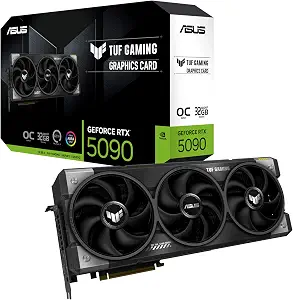
Choosing an RTX 5090 is a decision about how a specific card fits your plans, not just what appears in its name. The ASUS TUF Gaming GeForce RTX 5090 32GB GDDR7 OC Edition lists its memory, native display connections, two clock modes, dimensions and Axial-tech fans. Those details can help you decide what to verify for your setup, but they do not establish results in particular games or workloads. During Black Friday, treat the event as a reason to examine the exact listing and variant carefully—not as evidence that a promotion is active. Start with the jobs you expect the card to handle, then compare the listed details with your own requirements.
This ASUS TUF Gaming model is a gaming graphics card with 32 GB of GDDR7 graphics memory. Its listed connections are Native DisplayPort 2.1a x3 and Native HDMI 2.1b x2. That combination makes it a useful candidate for shoppers who want to plan around several types of display connections; the listing alone does not establish how a particular display setup will behave. Its stated default boost clock is 2550 MHz, while OC mode is listed at 2580 MHz.
I’d call it Best for planning multiple display connections, based on the stated mix of native outputs. That label is a way to describe a specification-based shopping fit, not a claim of measured superiority. For Black Friday, compare the complete product name and variant on the offer you are considering with the card described here. Then check the details that affect your decision, especially your display connections, space constraints and interest in the two listed clock modes.
Start with the displays you intend to connect
The card lists Native DisplayPort 2.1a x3 and Native HDMI 2.1b x2. Before buying, write down the connection type you plan to use for each display and compare that plan with these native outputs. This simple check can bring a mismatch to light before you commit to a graphics card. If your displays or setup have requirements beyond the connection names, confirm those separately; the provided specifications do not give further display capabilities or setup guidance.
This is a practical place to focus during Black Friday because a deal headline cannot tell you whether the listed connections suit your desk. Check that the offer identifies the same ASUS TUF Gaming GeForce RTX 5090 variant, then confirm the output details in the listing. If your display plans are still unsettled, decide which connections matter most before weighing the rest of the card’s features.
Put the memory figure in context of your plans
The listed graphics memory is 32 GB, and its type is GDDR7. Those are concrete specifications to compare when you are narrowing down an RTX 5090, but they do not predict how a particular game, creative application or other workload will run. Think about the tasks you expect to use the card for and whether this stated capacity and memory type are relevant to your decision. Avoid treating a large capacity figure as a substitute for checking requirements specific to your software.
On Black Friday, keep this distinction in mind when comparing product pages: verify that both the capacity and memory type belong to the exact card variant in the offer. Product names and deal descriptions may be abbreviated, so use the full model identification where it is available. The memory facts can help you make a focused comparison, while questions about application behavior remain separate and need evidence beyond these specifications.
Read the two clock entries as configuration details
The listed default mode has a 2550 MHz boost clock, and OC mode is listed at 2580 MHz. These are two stated clock details, not a promise about the clock a particular workload will sustain or the experience you will get in a game. If clock configuration matters to you, note which mode you intend to use and check whether the listing describes the same model and modes. The provided facts do not explain how to change modes or quantify their effect.
For a Black Friday comparison, avoid choosing solely by the larger of the two clock figures. Instead, treat both entries as product information and consider them alongside the connections, memory and physical dimensions that matter to your own setup. If an offer page uses different wording or omits a mode, confirm the exact variant before assuming it describes this card.
Check the measurements against your available space
The stated card dimensions are 13.7″L x 5.7″W. Compare those measurements with the space you have available, using the same orientation and measurement conventions as your own case or installation planning. The listing gives length and width; it does not provide every measurement or confirm fit in a particular system. If your decision depends on additional clearance or case details, verify those requirements separately rather than treating these two dimensions as a complete fit check.
This step is especially worthwhile when a Black Friday offer encourages a quick purchase. Pause long enough to confirm that the offer is for the same card and then compare its listed dimensions with your own measurements. A product name or image may not answer a fit question. Keeping the exact figures in your notes can also make it easier to compare this card with another option without relying on a vague impression of its size.
Treat the fan information as one part of the decision
Axial-tech fans are the cooling feature specified for this card. That tells you which fan feature is listed, but the provided information does not establish noise levels, temperatures, cooling results or behavior under a particular workload. If cooling characteristics are important to your purchase, separate the known fan detail from the questions that still need verification. This keeps the decision grounded in what is actually stated rather than assumptions about everyday operation.
A Black Friday listing may emphasize a feature prominently, but prominence is not additional evidence. Check that Axial-tech fans are listed for the exact ASUS TUF variant you are considering, then decide whether that fact answers your own buying question. For other cooling or operating details, look for information tied to the precise product rather than drawing conclusions from the fan name alone.
Use Black Friday to verify the exact offer, not guess at savings
There is no price or promotion information established here, so this guide cannot say whether a Black Friday offer is active or whether a particular listing represents savings. Compare the exact product name, variant and specifications shown on the offer with the ASUS TUF Gaming model discussed above. Be cautious about relying on a broad RTX 5090 label when your decision depends on a specific output set, memory configuration or clock entry.
Before placing an order, make a short personal checklist: confirm the model, compare the stated dimensions with your available space, and check the native outputs against your display plan. Then review the listing’s current terms and price directly, since those details are not provided here. This approach makes Black Friday a useful moment to compare options without assuming a discount, stock status or seller policy.
Key specs
| Graphics memory | 32 GB |
| Memory type | GDDR7 |
| Video outputs | Native DisplayPort 2.1a x3, Native HDMI 2.1b x2 |
| Default boost clock | Default mode: 2550 MHz(Boost clock) |
| OC mode clock | OC mode: 2580 MHz |
| Card dimensions | 13.7″L x 5.7″W |
| Cooling features | Axial-tech fans |
Make your Black Friday choice
The ASUS TUF Gaming GeForce RTX 5090 32GB GDDR7 OC Edition gives shoppers several specific details to assess: 32 GB of GDDR7, five listed native video outputs, two stated clock modes, 13.7″L x 5.7″W dimensions and Axial-tech fans. Decide which of those details matter for your own setup, and verify any unanswered requirements before buying. During Black Friday, let the exact offer and variant—not the seasonal label—guide your comparison.