Best Asus Laptop Buying Guide — Black Friday Deals 2026
Choosing an Asus laptop starts with an honest look at what you want it to do: support everyday work, make a gaming-focused setup, or give you more room for multitasking. This guide brings together three different approaches, from a Vivobook with a 15.6-inch display to a ROG Strix and a dual-screen Zenbook Duo. For Black Friday, the useful comparison is not just the headline offer. Check the exact model and configuration, then consider whether its listed screen, processor, memory, storage, and other details fit your routine.
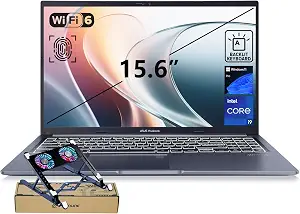
The ASUS Vivobook 15 is the Best Budget pick among these options for shoppers who prefer a familiar single-screen laptop with substantial listed memory and storage. Its 15.6-inch FHD display has a resolution of 1920 x 1080 pixels, while the Intel Core i9-13900H processor, 32 GB of memory, and 1 TB of storage give you concrete configuration details to weigh against the applications you expect to use. The label is an editorial choice among the products here, not a claim about its price or a market-wide award. For Black Friday, verify that the offer you are viewing matches this model and configuration.
Picture a workday that moves between writing, browsing, and keeping files close at hand. This Vivobook pairs Windows 11 Pro with 1 TB of storage, and its backlit keyboard and fingerprint reader are two specific features to consider when deciding whether its setup suits you. Those details can help you narrow your choice, but they do not establish how a particular application will run or what the laptop’s real-world battery life may be. Think through your own routine: do you want a conventional FHD display, and do the listed processor and memory align with your intended workload? That makes a more grounded comparison than relying on a broad label.
Before choosing a Black Friday listing, compare the product name and the specifications shown for the exact offer. In particular, check the processor, memory, storage, operating system, and display rather than assuming every listing for a Vivobook 15 has the same configuration. The included facts establish Windows 11 Pro, but they do not identify every application, port, or accessory, so confirm any detail that matters to your setup on the listing itself. If a 15.6-inch FHD screen and this set of listed components match your plans, this model offers a clear starting point for your shortlist. If a different screen arrangement or a gaming-focused graphics specification is central to your decision, compare the other picks before settling.
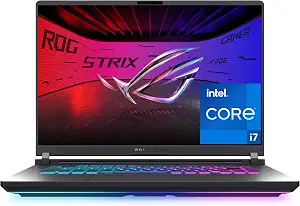
ASUS ROG Strix G16 (2025) Gaming Laptop (ASIN B0DZZWMB2L)
The ASUS ROG Strix G16 (2025) is the Best Overall choice in this group for a shopper whose priority is a gaming-oriented configuration. Its listed components include an Intel Core i7 Processor 14650HX, NVIDIA GeForce RTX 5060 graphics, and 16GB DDR5 memory. The display is listed as 16-inch FHD+ with a 16:10 aspect ratio and a 165Hz/3ms specification. These details provide a practical basis for comparing it with the other laptops here, without promising how a particular game will perform. Around Black Friday, make sure the listing you are considering identifies the same model and component configuration.
Imagine planning a desk setup around games alongside other computer tasks. The ROG’s listed 1TB Gen 4 SSD gives you a storage detail to compare with your needs, and Wi-Fi 7 is the wireless specification provided for this model. Windows 11 Home is its listed operating system. Consider which of those details matter most to your intended use rather than treating the Best Overall label as proof of measured superiority. The supplied facts identify a dedicated graphics component and a high-refresh-rate display specification, but they do not establish frame rates, cooling behavior, battery life, or how any particular title will look or run.
A Black Friday comparison should also account for what is not established by the product facts. For example, they do not specify the full port selection, included accessories, or a price for the exact offer. Check the seller’s listing for the details you need, and compare only offers that clearly identify the configuration you want. The ROG may suit your shortlist if its display format, processor, graphics, memory, and storage correspond to the way you plan to use a laptop. If you would rather prioritize a dual-screen workspace or a conventional 15.6-inch FHD setup, the Zenbook Duo and Vivobook offer different listed formats to consider.
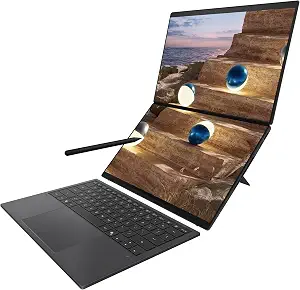
The ASUS Zenbook Duo Laptop (2026) earns the Best for multi-screen workflows label because its defining listed feature is a pair of 14-inch OLED 3K 144Hz touch displays. That arrangement makes it the most direct fit here for someone who wants two built-in screens to consider when planning a workspace. The label describes this editorial selection among the products in this guide; it does not claim that the design is best for every user. Its Intel Core Ultra 9 Processor 386H, 32GB RAM, and 1TB SSD are further configuration details to compare with the tasks you have in mind. Check the exact model when reviewing Black Friday offers.
Think about the shape of your typical session before choosing a dual-display laptop. You might want to keep separate kinds of content visible, or simply prefer the idea of more built-in screen area; whether that suits you depends on your own habits and workspace. The product facts establish two touch displays, but do not describe their positioning, software behavior, or how a specific application uses them. WiFi 7 is the listed wireless specification. For a wired setup, the stated ports are 2× Thunderbolt 4, 1× USB 3.2 Gen 2, and 1× HDMI 2.1 FRL. Check those against the devices you plan to connect instead of assuming a particular accessory or connection is supported.
The listed sleeve and stylus are included accessories, useful details to account for as you evaluate the offer. The product record does not establish the sleeve’s design or the stylus’s capabilities, so confirm any requirements on the listing. As with the other picks, the Black Friday headline alone cannot tell you whether an offer matches your preferred configuration. Verify the model name, processor, memory, storage, screens, ports, and included accessories shown for that specific offer. If you value a dual-screen format and its listed connection options, this model gives you a distinctive set of details to assess. If your priority is a gaming-oriented graphics specification or one standard FHD display, the other models may align more directly with that preference.
Key specs
Display
Dual 14” OLED 3K 144Hz Touch Display
Processor
Intel Core Ultra 9 Processor 386H
Memory
32GB RAM
Storage
1TB SSD
Wireless
WiFi 7
Ports
2× Thunderbolt 4, 1× USB 3.2 Gen 2, and 1× HDMI 2.1 FRL
Included accessories
Sleeve and Stylus Included
Map the laptop to a real day, not an ideal one
Start by describing a typical day in concrete terms. List the applications and kinds of tasks you expect to handle, whether you usually work at a desk, and whether you prefer one display or more screen space. This is a self-assessment, not a prediction of performance: the specifications here do not say how any particular program will behave. They do help you see how the options differ. The Vivobook lists a 15.6-inch FHD display; the ROG Strix lists a 16-inch FHD+ display with a 16:10 format; and the Zenbook Duo lists dual 14-inch OLED touch displays. Decide which screen arrangement feels relevant to your routine before comparing offers.
Next, identify your non-negotiables. A specific operating system, listed port, or included accessory may matter more to you than a headline component. Windows 11 Pro is listed for the Vivobook, while Windows 11 Home is listed for the ROG Strix. The Zenbook Duo lists several ports and includes a sleeve and stylus. These facts are useful filters, but do not fill in unlisted details by assumption. During Black Friday, write down the exact configuration you want and use it as a checklist when you open an offer. A clear personal checklist helps keep the decision tied to your intended use, rather than to a promotion’s wording.
Let the display format shape your shortlist
A screen choice affects how you imagine arranging your work, so compare the formats before focusing on processor names. The Vivobook’s listed 15.6-inch FHD screen and the ROG Strix’s 16-inch FHD+ 16:10 display are single-screen options in the supplied descriptions. The ROG listing also specifies 165Hz/3ms. The Zenbook Duo takes a different route with dual 14-inch OLED 3K 144Hz touch displays. These descriptions let you distinguish the choices without assuming that a particular display is automatically more comfortable or suitable for every task.
Ask yourself what you want visible at once and where you plan to use the laptop. If you prefer a single display, compare the Vivobook and ROG formats in light of your own routine. If the idea of two built-in displays is central to your plan, the Zenbook Duo is the one in this set with that listed arrangement. For Black Friday, inspect the exact screen description attached to the offer rather than relying on a shortened product title. Also consider whether the display details you care about are actually stated. The provided facts do not describe brightness, color coverage, or other display qualities, so do not treat them as established when making your comparison.
Compare the component mix to your intended tasks
Processor, memory, storage, and graphics are more useful as a combination than as isolated headline terms. The Vivobook lists an Intel Core i9-13900H, 32 GB of memory, and 1 TB of storage. The ROG Strix lists an Intel Core i7 Processor 14650HX, 16GB DDR5, a 1TB Gen 4 SSD, and NVIDIA GeForce RTX 5060 graphics. The Zenbook Duo lists an Intel Core Ultra 9 Processor 386H, 32GB RAM, and a 1TB SSD. Consider those exact configurations alongside the applications and files you expect to use; the specifications alone do not establish a ranking for every workload.
Make a short list of what you need to decide, then compare each model against it. Does a listed graphics component matter to your intended use? Is a particular memory amount important to your plans? How much storage do you want available in the stated configuration? Those questions are more useful than assuming a product label guarantees a result. Black Friday can make it tempting to choose quickly, but first confirm the offer’s model and component details. If a listing does not make a specification clear, seek clarification rather than treating a similar product name as proof that the configurations match.
Use Black Friday listings to verify the exact offer
Treat a Black Friday offer as a configuration to inspect, not as a promise about what you will receive beyond what the listing states. Start with the complete model name and compare it with the product you meant to consider. Then check the processor, display, memory, storage, and operating system where those details matter to your decision. A listing’s title may not communicate every relevant distinction, so review the specification information for the actual offer. Do not infer that every laptop sharing a family name has identical components.
Make your comparison on consistent terms. If one offer displays detailed specifications and another leaves an important detail unclear, note that uncertainty rather than filling it in. The supplied product facts do not include current prices, discounts, availability, or seller policies, so those must be checked directly on the offer you are considering. Avoid treating a discount headline as evidence that the model fits your needs. A careful Black Friday decision comes from matching the verified configuration to your checklist, then deciding whether the offer itself suits your purchase plans. If the configuration differs from the one you wanted, pause and reassess rather than assuming the difference is minor.
Account for connections, software, and included items
Small setup details can determine whether a laptop fits into your routine. The Zenbook Duo lists 2× Thunderbolt 4, 1× USB 3.2 Gen 2, and 1× HDMI 2.1 FRL, along with a sleeve and stylus. Those are specific details worth checking against the devices and accessories you plan to use. The supplied facts do not establish which accessories are included with the other models or provide their full port lists, so do not assume those details from the product family. Look for confirmation on the exact listing if a connection or extra is important to you.
The listed operating systems also differ: Windows 11 Pro appears for the Vivobook, while Windows 11 Home appears for the ROG Strix. No operating system is specified in the supplied facts for the Zenbook Duo, so verify that information if it affects your decision. Black Friday listings can be easier to compare when you separate confirmed details from questions still to answer. Write down the software, port, or accessory requirements you care about, and check each one against the precise offer. This prevents a tempting headline from distracting you from a practical mismatch or an unverified detail.
Make your Black Friday choice
There is no single Asus laptop in this group that fits every routine. The Vivobook offers a conventional FHD setup with its listed processor, memory, and storage; the ROG Strix brings a gaming-oriented graphics specification and display details; and the Zenbook Duo centers on dual touch displays. Use your own priorities to decide which differences matter, then verify the exact configuration and offer before purchasing. A careful Black Friday comparison is about choosing the listed features you actually want—not assuming a headline or recommendation label settles the decision.