Best Gaming Laptop Buying Guide — Black Friday Deals 2026
A gaming laptop shortlist is most useful when it starts with your constraint, not a sale banner. Decide whether you care most about a lower-cost configuration, a newer-looking graphics-and-memory combination, or a particular screen format and refresh rate. These three options make those priorities visible through their listed specifications: the HP Victus pairs a 144Hz Full HD display with an RTX 3050, the Acer Nitro V 16S AI lists an RTX 5060 Laptop GPU and a 180Hz WUXGA display, and the MSI Katana specifies a QHD+ display with a 165Hz refresh rate. For Black Friday, compare the exact listing and configuration before treating an offer as a match. A promotion is only useful if the product variant suits your needs.
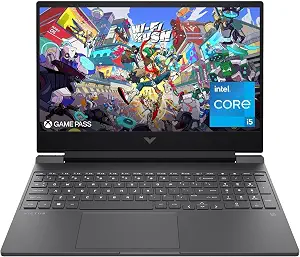
HP Victus 15.6″ Full HD 144Hz Gaming Laptop, Intel Core i5-12450H, NVIDIA GeForce RTX 3050,16GB RAM, 512GB PCIe SSD, Wi-Fi 6, Backlit Keyboard,Windows 11 Pro, Performance Blue
HP Victus 15.6″ Full HD 144Hz Gaming Laptop, Intel Core i5-12450H, NVIDIA GeForce RTX 3050,16GB RAM, 512GB PCIe SSD, Wi-Fi 6, Backlit Keyboard,Windows 11 Pro, Performance Blue (ASIN B0DJ3L37TY)
Best Budget is the editorial label for this HP Victus configuration among the options in this guide; it is not a claim about market-wide pricing or measured value. Its listed components make it a straightforward place to begin if you want to keep your shortlist focused: an Intel Core i5-12450H processor, NVIDIA GeForce RTX 3050 graphics, 16GB RAM and a 512GB PCIe SSD. The 15.6″ Full HD display has a 144Hz refresh rate. Those details give you a clear set of points to verify when a Black Friday listing presents the laptop under a broad model name.
For everyday decisions, consider what each specification means for your own setup rather than assuming that one number answers everything. The display’s Full HD resolution and 144Hz refresh rate may be relevant if you want a screen with those stated characteristics; the listing does not establish how any particular game will run. The 16GB RAM and 512GB PCIe SSD tell you the included memory and storage configuration, so think about the apps and files you expect to keep on the machine. Windows 11 Pro and Wi-Fi 6 are also listed, useful details to check against your software and wireless preferences.
The practical tradeoff is choosing this particular specification set instead of paying attention only to a product-family name or a headline. The RTX 3050 is the stated graphics component, and the processor is the Intel Core i5-12450H; do not assume that a different Victus listing uses the same parts. If you are comparing it with another laptop, write down the display, memory, storage and operating system as well as the processor and graphics. That makes differences between the actual configurations easier to notice without treating a single component as a complete buying verdict.
During Black Friday, open the exact product page and confirm that the selected option still names the Intel Core i5-12450H, RTX 3050, 16GB RAM, 512GB PCIe SSD and 15.6″ Full HD 144Hz display. Check Windows 11 Pro and Wi-Fi 6 there too. Compare the offer presented for that precise configuration with other listings you are considering; no sale label by itself establishes that the configuration is the right one for you. This is a sensible Best Budget pick when the listed feature mix fits your priorities, rather than a promise of the lowest price.
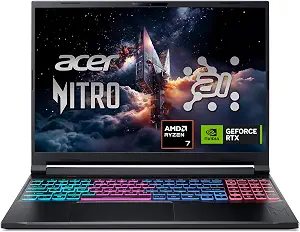
Acer Nitro V 16S AI Gaming Laptop (ASIN B0F195W823)
Best Overall is the editorial choice for the Acer Nitro V 16S AI within this three-product selection, based on the breadth of its listed configuration rather than a test result or a claim of universal superiority. It combines an AMD Ryzen 7 260 Processor with an NVIDIA GeForce RTX 5060 Laptop GPU, 32GB DDR5 and a 1TB Gen 4 SSD. Its display is listed as 16″ WUXGA IPS with a 180Hz refresh rate, and Wi-Fi 6 is specified. For shoppers balancing several stated features, this configuration offers a useful middle point to examine during Black Friday comparisons.
The screen description is worth reading in full: WUXGA IPS and 180Hz are the supplied display details, not simply a screen-size label. Consider whether those are the display characteristics you want, and compare them with the exact resolution and refresh-rate information shown for other candidates. The 32GB DDR5 memory and 1TB Gen 4 SSD may also matter when you are deciding how much included memory and storage you want. Those capacities describe this configuration; they do not guarantee how much space your own games and files will occupy over time.
The Acer’s processor and graphics are listed together as Ryzen 7 260 and RTX 5060 Laptop GPU. Keep both in your comparison notes, since checking only one component can leave you with an incomplete picture of the offered configuration. This article cannot establish frame rates, performance in a particular game, battery life or upgrade options from the provided specifications. Instead, use the stated components to decide whether this is the kind of system you want to investigate, then rely on the exact listing for any other information that matters to your purchase.
For a Black Friday shortlist, verify the product name and all key details on the chosen listing: Ryzen 7 260 Processor, RTX 5060 Laptop GPU, 32GB DDR5, 1TB Gen 4 SSD and 16″ WUXGA IPS 180Hz display. Confirm that the offer applies to this configuration rather than another option displayed on the same page. Wi-Fi 6 is listed as well. The Best Overall label simply marks this guide’s broad-feature pick among the three choices; choose it when those specific components align with your screen, memory and storage preferences.
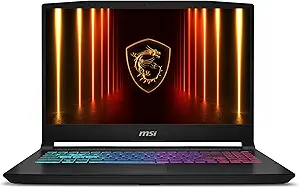
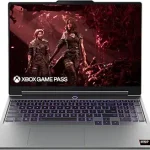
Best for a QHD+ 165Hz display configuration is the editorial label for this MSI Katana 15 HX. The display is the distinguishing decision point in its supplied description: the product name identifies a 15.6” 165Hz QHD+ gaming laptop, and the specification list gives a 165Hz refresh rate. Its other stated components are an Intel Core i9-14900HX processor, NVIDIA Geforce RTX 5070 graphics, 32GB DDR5 and a 1TB NVMe SSD. Windows 11 Home is listed. Consider this option if the QHD+ and 165Hz combination is central to your screen preference.
A display label alone does not settle whether the laptop suits your desk, games or viewing habits. Compare the exact QHD+ wording and refresh rate against the screen details you want, and make sure the selected listing is actually the Katana configuration described here. The processor and graphics are also important parts of the listed setup, while the memory and SSD give you concrete capacities and storage type to compare. Avoid assuming that another configuration with the same family name carries these same parts.
This configuration can be a useful counterpoint if your decision is screen-led: the Acer lists a WUXGA IPS 180Hz display, while the HP lists a Full HD 144Hz display, and the MSI names QHD+ with a 165Hz refresh rate. Those are distinct supplied descriptions, not a ranking of image quality or actual gaming results. Your preference may depend on the resolution and refresh-rate combination you want, alongside the remaining components. Check the listing for any additional display information you consider necessary, rather than filling gaps with assumptions.
When Black Friday offers appear, use the MSI’s full specification set as a checklist: Intel Core i9-14900HX, NVIDIA Geforce RTX 5070, 32GB DDR5, 1TB NVMe SSD, Windows 11 Home and the QHD+ 165Hz display description. Make sure the offer refers to this variant before comparing it with another laptop or another Katana configuration. The Best for a QHD+ 165Hz display configuration label explains why it is included here; it does not claim that the screen or laptop outperforms alternatives.
Key specs
Processor
Intel Core i9-14900HX
Graphics
NVIDIA Geforce RTX 5070
Memory
32GB DDR5
Storage
1TB NVMe SSD
Display refresh rate
Display Refresh Rate in Hertz 165
Operating system
Windows 11 Home
Set a realistic purchase boundary before browsing
Start by writing down the constraint that will decide the purchase: the configuration you need, the display traits you want, or the amount you are prepared to spend. Since no prices are supplied here, make your own comparison from the exact offers available when you shop. Avoid letting a Black Friday banner make you change the target before you have identified the parts that matter. If the budget is the leading concern, the HP is labeled Best Budget in this guide, but you still need to check its live offer and confirm that its listed parts meet your needs.
A simple worksheet can keep the comparison practical. Give each candidate a row for processor, graphics, memory, storage, display, operating system and wireless. Fill in only what the listing explicitly says, and mark details you still need to investigate. This prevents a missing detail from being mistaken for a positive or negative feature. Then compare the complete configurations against your priorities. A lower offer may be less relevant if it belongs to a different variant, while a more appealing specification does not automatically make sense if it exceeds what you need or want to pay.
Choose a screen description that matches your preference
These choices illustrate why display details deserve more attention than a diagonal measurement alone. The HP lists a 15.6″ Full HD 144Hz display; the Acer lists a 16″ WUXGA IPS 180Hz display; and the MSI identifies a 15.6” QHD+ screen with a 165Hz refresh rate. Decide which stated resolution and refresh-rate combination you want to investigate. The source details do not establish brightness, color coverage or the experience in a particular game, so seek listing information for those questions if they affect your decision.
Refresh rate is one useful comparison field, not a substitute for considering the whole screen. A shopper who has settled on QHD+ can focus on whether the MSI listing matches that preference; someone considering the Acer should note its WUXGA IPS description, while the HP offers a Full HD description. These formats are not interchangeable terms, and you should preserve the wording when comparing. During Black Friday, verify that the screen details belong to the same configuration as the offer, especially when a product page lets you select different options.
Treat processor and graphics as a paired checklist
Record the processor and graphics together rather than choosing by a single headline part. The HP pairs an Intel Core i5-12450H with an NVIDIA GeForce RTX 3050. The Acer pairs an AMD Ryzen 7 260 Processor with an NVIDIA GeForce RTX 5060 Laptop GPU. The MSI pairs an Intel Core i9-14900HX with NVIDIA Geforce RTX 5070. These are the components supplied for these specific listings; this guide does not establish how they compare in frame rates or in any named game.
Use that pair to narrow the field according to your own requirements, then check other information you need directly on the listing. Do not assume that a graphics name tells you everything about a laptop or that processor labels alone settle the decision. For Black Friday, confirm both parts on the selected variant before comparing offers. This small check can help catch a mismatch between the configuration you researched and the one currently selected, without treating a promotion or product title as proof that the hardware is identical.
Think through included memory and storage
The listed memory and storage provide another direct way to compare configurations: the HP has 16GB RAM and a 512GB PCIe SSD; the Acer has 32GB DDR5 and a 1TB Gen 4 SSD; the MSI has 32GB DDR5 and a 1TB NVMe SSD. Consider the capacity you want for your planned apps, games and files, and whether the stated storage type is a factor for you. These figures describe what is listed, not how much room you will have after setup or how easily a system can be expanded.
Before buying, look for the same memory and storage details on the exact offer page, including the type where it is specified. If your shortlist includes different capacities, decide whether the difference matters more than the display or another priority; do not assume you can change a component later unless the listing confirms that possibility. Black Friday comparison notes are especially helpful here: a similar product name can make two offers seem equivalent even when the stated memory or storage differs.
Make the offer earn its place on your shortlist
A Black Friday label should prompt a closer comparison, not an automatic purchase. Read the selected configuration from the listing and compare its stated processor, graphics, memory, storage and display with the version you meant to shop for. Note the operating system and wireless specification too: Windows 11 Pro and Wi-Fi 6 are listed for the HP, Wi-Fi 6 for the Acer, and Windows 11 Home for the MSI. The available facts do not establish current prices, promotion terms, stock or seller policies, so verify those details directly before deciding.
Finally, compare offers only after you have confirmed that they refer to the configurations you want. Keep a short record of the exact model and specifications, then assess the offer presented for each matching option rather than relying on a broad product-family title. If one listing leaves an important question unanswered, pause and find that information before checkout. This approach makes Black Friday shopping a comparison exercise grounded in your requirements, not a race to choose the most prominent banner.
Make your Black Friday choice
The right gaming laptop from this selection depends on what you want to prioritize: the HP Victus is the Best Budget choice here, the Acer Nitro V 16S AI is the Best Overall editorial pick, and the MSI Katana is the choice for a QHD+ 165Hz display configuration. These labels help organize the options, but they do not replace checking the exact specifications or deciding what matters to you. For Black Friday, confirm the selected variant, compare its complete offer with your worksheet, and buy only when the configuration fits your needs and the terms are clear.