Best Home Health Care Buying Guide — Black Friday Deals 2026
Home health care equipment can make it easier to check particular readings at home, but the right choice depends on what you want to measure and how the device fits your routine. This guide compares a non-contact thermometer, an upper-arm blood pressure monitor and a fingertip pulse oximeter; they serve different purposes, so they are not substitutes for one another. For Black Friday, compare the exact product and variant shown in the offer rather than assuming the event label means a particular discount or bundle. Pay attention to the listed measurement method, display, memory and power details, then consider who will use the device and where it will be kept. The products below have distinct strengths on paper, with practical tradeoffs to weigh before checkout.
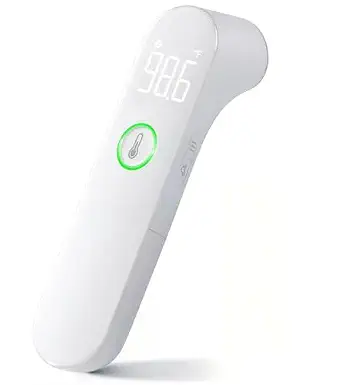
Viproud Thermometer for Adults and Kids (ASIN B0CGRB23YM)
Best Overall is an editorial pick among the products in this guide, not a claim of measured superiority. The Viproud Thermometer for Adults and Kids is the option to consider when a household wants a non-contact way to check temperature. Its listed response time is 1 seconds, and the stated temperature range runs from 89.6 °F to 109.2 °F. Those specifics give shoppers concrete details to compare with their intended use. The listing also says the temperature units are switchable between ℉ and ℃, which may suit people who prefer one format for their notes and another for reading the display.
For a home routine involving more than one person, the thermometer’s 35 sets of memory storage may help keep earlier readings available on the device. That is a storage feature, not a substitute for interpreting a reading in context or following professional guidance. The included power detail is 2 AAA batteries required. (included), and the device has a 30 seconds auto shut-off function. A shopper deciding where to keep it can consider whether those listed controls and battery details suit the household’s habits. Since the measurement is non-contact, it may appeal to someone who would rather not use a device that must be placed against the body; follow the product’s own instructions for use.
This is a reasonable Best Overall choice for a shopper whose priority is temperature checks, rather than blood pressure or oxygen-related readings. It is not the most relevant pick if the main task is tracking either of those other measures. On Black Friday, verify that the listing is for the Viproud thermometer and check the offered variant and included items before comparing the offer. Do not assume a sale headline tells you whether the displayed range, memory or battery details apply to the exact selection. The useful decision is whether this thermometer’s stated measurement approach and stored-reading capacity match the way you expect to use it at home.
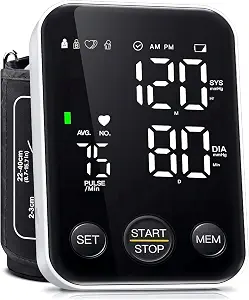
Oklar Blood Pressure Monitor Upper Arm BP Machine (ASIN B0CCXHL3JJ)
Best for shared blood pressure tracking is the label assigned to the Oklar Blood Pressure Monitor Upper Arm BP Machine. That distinction reflects its stated support for two users, with 120 readings stored per user; it does not mean the device has been compared in testing. If more than one person expects to use the monitor, separate user storage is a practical listing detail to consider. The cuff range is 8.7 – 15.7 inches (22-40 cm), so compare that exact range with the intended user’s needs rather than assuming an upper-arm cuff will fit everyone.
The monitor uses one-button operation and has a backlit LED screen with clear digits. The product description says readings are available within 1 minute. Those details may be useful to someone who wants a straightforward control and a display they can read in their usual setting. Memory may also make it easier to revisit a device’s saved readings, but storage alone does not interpret them or establish what action to take. Consider who will operate the monitor and how they plan to use the recorded information, especially if more than one person will be sharing it.
Power is listed as 3AA batteries or a Type-C interface, and the product is explicitly described as not rechargeable. Keep both details in view when checking a Black Friday offer: do not treat the Type-C interface as evidence that the device recharges, and confirm that the exact variant presented matches the product you intend to buy. The Best for shared blood pressure tracking label is most relevant when multiple users and saved readings are central to the decision. If the household needs temperature or SpO2 and pulse-rate information instead, this is the wrong category of device for that task. Choose it for the blood pressure use case and the listed cuff fit, not simply because it appears in a home health care deal.
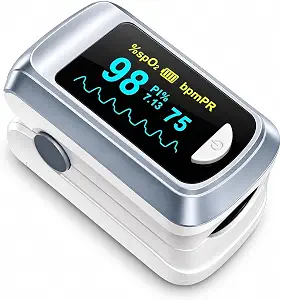
Best Budget is the editorial label for the Fingertip Pulse Oximeter; it is a guide distinction, not a claim about its current price or a market-wide award. Its bright screen clearly shows SpO2, pulse rate and signal strength. A waveform bar graph provides visual confirmation of pulse strength, giving the display another piece of information to look at. Consider whether those are the readings and visual cues you want from a home device. This product is for a different task from the thermometer and blood pressure monitor, so compare it only with options meant for the same kind of measurement.
One-button operation keeps the listed control simple. The oximeter also has auto power-off to preserve battery life, requires 2 AAA batteries (included), and comes with 1x Lanyard for easy carrying. Its stated dimensions are 2.25 x 1.2 x 1.25 inches and its weight is 2.4 ounces. Those facts can help you decide whether the listed size, weight and carrying accessory suit the place you expect to keep or use it. They do not establish how a particular person will find the device to handle, so think about the actual user and their comfort with a fingertip format.
For Black Friday, check that the selected listing is this fingertip model and verify which accessories are included in the exact offer. Do not assume a promotional label means that batteries or another item have been added beyond what the listing states. The Best Budget label identifies this as the guide’s budget-oriented pick, but no current price or discount is implied. It may suit a shopper who wants the displayed SpO2, pulse rate and signal strength, along with a one-button control and carrying lanyard. It is not a general-purpose substitute for the other products: match the device to the reading you are seeking, and use readings as information rather than a diagnosis.
Key specs
Display
Bright screen clearly shows SpO2, pulse rate, and signal strength
Pulse indicator
The waveform bar graph provides visual confirmation of pulse strength
Operation
One-button operation
Power saving
Auto power-off preserves battery life.
Dimensions
2.25 x 1.2 x 1.25 inches
Weight
2.4 ounces
Batteries
2 AAA batteries required. (included)
Included accessories
1x Lanyard for easy carrying
Choose equipment by the reading you need
Start by naming the home-care question, rather than looking for one device to cover every purpose. The Viproud is a thermometer for temperature checks, the Oklar is an upper-arm blood pressure monitor, and the fingertip pulse oximeter displays SpO2, pulse rate and signal strength. Their functions are distinct. If you are comparing products during Black Friday, keep the intended measurement at the center of the decision; an offer on a different category does not meet the same need just because both products are marketed for home health care.
Next, consider the routine in which the device will be used. A shopper drawn to a non-contact temperature measurement may focus on the thermometer’s response time, range and memory. Someone seeking a blood pressure monitor may care more about its cuff range, user storage and screen. For the oximeter, the listed readings and pulse-strength graph are the relevant details. These are ways to sort the choices, not promises about how any person will respond to a device or what a reading means.
A household may have a reason to consider more than one category, but buying several devices is not automatically necessary. Decide which check matters to your routine, then read the product description for that model. If a clinician has recommended a particular kind of home measurement, use that guidance to inform the category choice. Avoid relying on a general deal headline to decide what health information you should collect.
Black Friday: verify the offer and the selected variant
Treat Black Friday as a time to compare listings, not as proof that any specific product is discounted. Check the exact product name, model selection and variant displayed in the offer before making a decision. A promotion may feature one selection while the page presents other options, so make sure the item in the cart is the one whose details you reviewed. The product information here does not establish an active promotion, current price or amount saved.
Compare what the listing actually says about the device and included items. For the thermometer, that means checking the temperature range, memory, units and included batteries. For the blood pressure monitor, note the stated cuff range, two-user memory, power description and non-rechargeable qualification. For the oximeter, review its displayed readings, batteries and lanyard. These are useful points of comparison even when the offer language is brief; none should be assumed to change simply because a page uses a Black Friday banner.
If a listing’s selected option or included items are unclear, resolve that question before purchase rather than filling in the gaps from a headline. Compare like with like: a different model, package or variant may not have the same details. Make the decision based on the confirmed item and whether it suits the intended user and task, not on urgency in promotional wording.
Make the display and controls fit the user
The person who will use a device should be part of the selection. The Oklar lists one-button operation and a backlit LED screen with clear digits. The fingertip oximeter also has one-button operation, and its bright screen presents several readings alongside a waveform bar graph. The thermometer’s provided specifications describe a non-contact measurement method and switchable temperature units. Compare these details with the user’s preferences and typical setting instead of assuming that a simple control or a bright display will work equally well for everyone.
Think through when and where the device will be used. Someone reading a screen in a dim room may want to note the Oklar’s backlit display; another person may prefer the oximeter’s listed visual indicators. If more than one person will handle a device, consider whether the displayed information is understandable to each of them. These are practical questions for choosing a product, not claims about display quality beyond the descriptions provided.
For Black Friday shoppers, use display and control details as a way to distinguish otherwise similar-looking options. Check the product description for the exact model rather than assuming that every item in a category uses the same screen or controls. If the intended user has questions about operating or interpreting a device, consult the product instructions and appropriate health professional rather than treating a shopping description as usage guidance.
Decide what saved readings should do for you
Storage can matter when a household wants to look back at readings, but capacity is only one part of a useful record-keeping routine. The thermometer lists 35 sets of memory storage. The blood pressure monitor supports two users and stores 120 readings per user. The pulse oximeter’s provided facts do not list saved-reading memory, so do not assume a storage feature that is not specified here. If memory is a priority, check the exact listing and instructions before treating it as a deciding factor.
Ask who will use any stored information and how it will be reviewed. The Oklar’s separate user support is relevant to a shared blood pressure routine; the thermometer’s memory may be relevant when keeping temperature readings on the device. In either case, a saved result does not explain why it changed or what action is appropriate. Follow professional guidance for interpreting health information, and do not use a device’s memory as a substitute for that judgment.
Black Friday comparisons can make a feature list feel like a checklist to maximize, but more stored readings are not automatically more useful for every household. If you only need a device for a specific check, focus on its measurement type and practical fit. If keeping a record matters, confirm how the device handles users and stored readings. Choose the capacity that serves the intended routine, rather than paying attention to a large number in isolation.
Consider fit, batteries and placement before checkout
Physical fit and power can settle a choice after you have identified the right measurement category. For the Oklar, compare the listed cuff range of 8.7 – 15.7 inches (22-40 cm) with the intended user’s needs. For the oximeter, its stated dimensions and weight, plus the included lanyard, may help you consider carrying and storage. The thermometer is non-contact, with 2 AAA batteries required. (included). These details describe different practical considerations; one cannot replace checking whether the device suits its user.
Power wording deserves close attention. The Oklar lists 3AA batteries or a Type-C interface and also says the product is not rechargeable. Keep both statements together when reviewing the exact listing; do not infer rechargeability from the interface. The thermometer and oximeter each list included AAA batteries. For any model, check the selected offer’s included items and instructions rather than assuming that every listing has the same package.
Placement is another everyday decision: choose somewhere the intended user can find the device and consult its instructions. During Black Friday, compare the exact item’s fit and power details before weighing any offer language. A favorable headline is less useful than confirming the cuff range, battery information or carrying details relevant to your routine. Where a listing leaves a practical question unanswered, seek clarification before purchasing instead of assuming a feature.
Make your Black Friday choice
A useful home health care purchase starts with the measurement you actually want, then narrows by user, display, memory, fit and power. The thermometer, blood pressure monitor and pulse oximeter in this guide address different tasks, so choose by purpose rather than trying to rank them as interchangeable devices. During Black Friday, check the exact model, variant and included items, and do not assume an event label guarantees a discount. Review the product instructions and seek appropriate professional guidance about interpreting readings. That approach keeps the decision grounded in the listed details and the routine the device is meant to support.